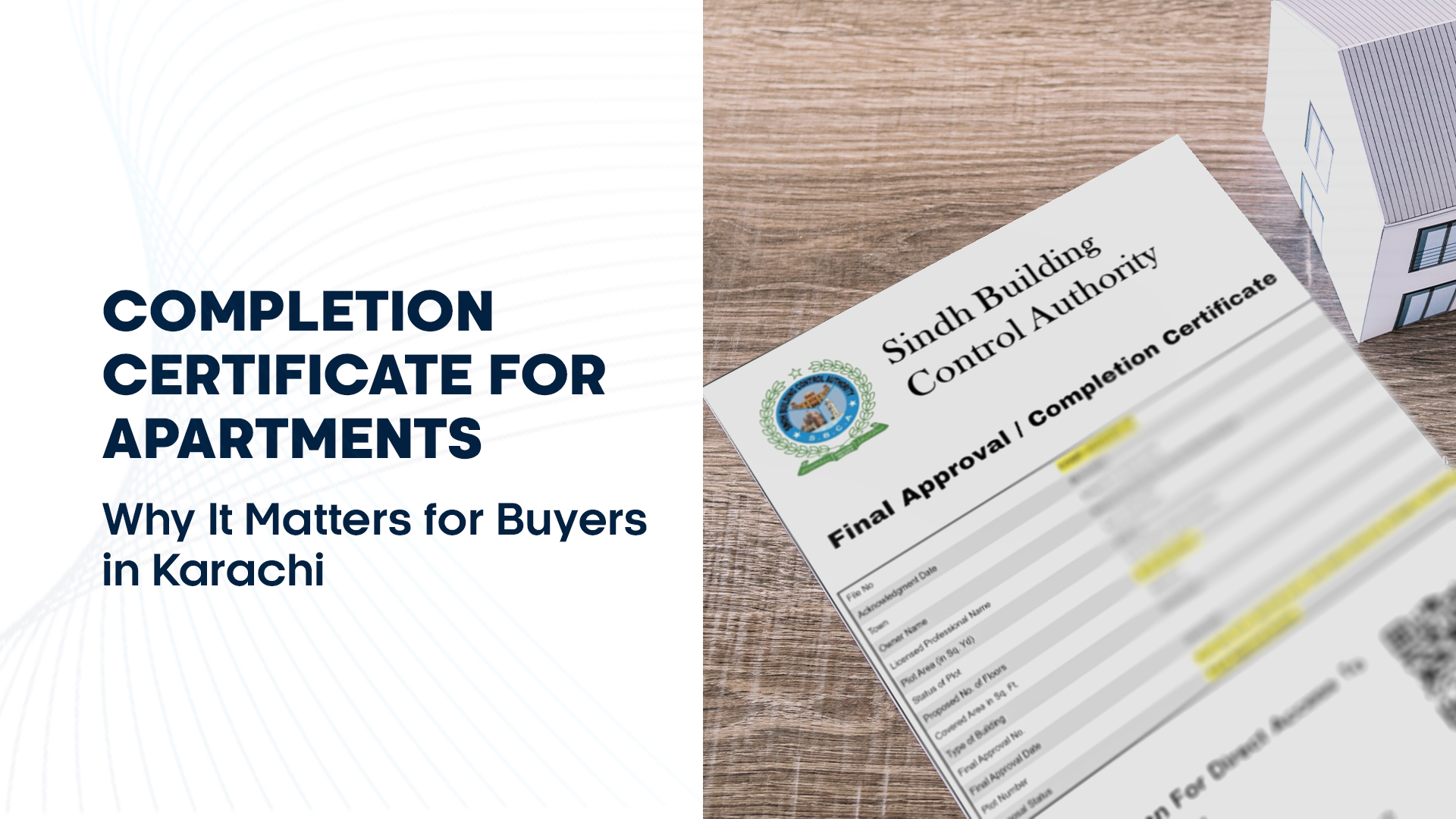
Completion Certificate for Apartments: Why It Matters for Buyers in Karachi
Karachi’s vertical growth is reshaping how people live and invest. Apartments are now a preferred choice for families, overseas Pakistanis, and investors. Yet amid attractive brochures and payment plans, buyers often overlook one critical document, the Completion certificate for flats.
This certificate is not just paperwork. It is legal proof that a building has been constructed according to approved plans and safety regulations. Without it, ownership can become complicated, utilities may face hurdles, and resale can be difficult.
If you are planning to buy an apartment, understanding this document can protect your investment and your future peace of mind.
What Is a Completion Certificate In Real Estate?
A completion certificate meaning, refers to an official approval issued by the concerned building authority after construction is finished, confirming that the project follows the sanctioned building plan, zoning rules, and structural standards.
In simple words, the authority checks whether what was approved on paper is what has actually been built on the ground. If everything complies, the certificate is granted. For buyers, this document acts as assurance that the property is legally recognised.
What the Completion Certificate Confirms
A CC verifies several important aspects of a building. It confirms that the structure matches the approved layout. It also ensures that height limits, covered area, emergency access, and other regulatory requirements are followed.
Authorities may review safety measures such as fire provisions, structural stability, and service areas. A completion certificate is issued after construction is finished and the authorities verify that the building matches the approved plans and regulatory requirements.
Who Issues the Completion Certificate in Karachi
In Karachi, the primary authority responsible for approving building completion is the Sindh Building Control Authority. Developers must apply to the authority once construction is complete.
Officials review documentation and may conduct site inspections. If the building aligns with the approved drawings and regulations, the CC is issued. Without this approval, a project may be treated as non-compliant, even if people have already moved in.
How the Completion Certificate Process Works
The process usually begins when the developer submits a completion notice to the authority. Supporting documents are attached. These include approved plans, structural reports, and evidence that required standards have been met.
Inspectors may visit the site. They check dimensions, setbacks, common areas, and safety arrangements. If discrepancies are found, corrections may be demanded. Once satisfied, the authority grants the certificate. This becomes part of the project’s legal record.
Why Completion Certificate Matters for Apartment Buyers
An apartment can be sold without an apartment completion certificate in Karachi, but the sale may face legal challenges, reduced buyer confidence, and difficulties in registration. A Completion Certificate is mandatory for apartments because it legally confirms that the building complies with approved plans and safety standards and is fit for occupation. It has a direct connection with your legal ownership, financial safety, and the future value of your property. Many problems that surface years after possession often stem from missing or incomplete approvals.
When a building carries proper certification, buyers feel secure. They know the project has been reviewed by the relevant authority and recorded in official systems. This clarity reduces uncertainty and strengthens trust in the transaction. Let’s understand how this document influences different aspects of ownership.
Legality and Protection
A valid certificate confirms that the building has been constructed according to approved drawings and regulations. It shows that the project is recognised by the authorities and is not considered an unauthorised structure.
For buyers, this lowers the possibility of regulatory notices, penalties, or future demolition risks. Legal standing becomes stronger. You are not depending only on promises made in marketing material.
This protection is especially important in cities where building violations have historically created complications for residents. Having the certificate means your home rests on documented approval, not assumptions.
Smooth Ownership Transfer
Ownership does not end at apartment possession documents. Over time, you may want to sell, gift, or transfer the apartment to family members. Proper documentation makes these processes straightforward.
When a building completion certificate in Pakistan exists, record updates with authorities and registrars become easier. Buyers in the resale market usually demand proof that the building is fully approved. Absence of the document can delay deals or reduce buyer interest. In simple terms, complete paperwork keeps future options open.
Safety and Compliance
Before issuing a certificate, authorities review whether key planning and safety requirements have been met. These may include structural parameters, access provisions, and designated service areas.
While approval does not guarantee perfection, it indicates that minimum standards were checked. For families, this brings psychological comfort. They know that the building has passed an official layer of scrutiny.
In contrast, uncertified buildings raise questions. Buyers may wonder what else was overlooked during construction.
Bank Financing and Mortgages
Banks typically do not approve loans or release final installments for apartments without a valid completion certificate. Banks and financial institutions operate on risk assessment. They prefer properties that have a clear legal status. A Completion Certificate supports that clarity. If you are purchasing through financing, missing approvals can slow down disbursements. In some cases, banks may hesitate to proceed until documentation is verified.
Even after purchase, having proper certification helps when using property as collateral. It strengthens the asset’s credibility in the financial system.
Utility Connections
In most cases, utilities cannot be permanently connected without a completion certificate. Permanent utility connections are vital for comfortable living. Electricity, water supply, gas, and sewerage services often require proof that the building is legally completed.
Where certification is absent, residents may face delays, temporary arrangements, or additional procedures. This can affect daily life and create avoidable stress. A documented building usually moves through administrative channels more smoothly.
Resale and Investment Value
Real estate is often a long-term investment. Marketability matters. When the time comes to sell, informed buyers and agents review legal documents carefully. A valid completion certificate positively affects resale value by assuring buyers of legal compliance and reducing transaction risks.
Apartments in certified projects tend to attract better confidence. Transactions move faster. Negotiations become simpler because doubts are minimal. On the other hand, missing approvals can reduce demand. Buyers may either walk away or expect lower prices to compensate for risk. For investors, the Completion Certificate becomes a silent advantage that protects value over time.
Legal Framework in Karachi
Karachi’s construction activity is governed by city regulations and building control laws. Bodies such as the Karachi Metropolitan Corporation also play roles in planning and municipal oversight in different contexts.
These regulations require developers to inform authorities once work is complete. The aim is to ensure urban growth remains organised and safe. However, enforcement variations have historically created confusion in the market. This makes buyer awareness even more important.
Risks of Buying Without a Completion Certificate
Builders may give possession without a completion certificate to meet project deadlines, collect payments, or maintain cash flow, despite pending official approvals. And buyers can sometimes take possession without a completion certificate, but doing so carries legal, financial, and resale risks.
At first, the unit may look ready. Possession might even be offered. However, the absence of formal approval from the relevant authority leaves several matters unsettled. Living in an apartment without a completion certificate is not fully legal, as the building may not be officially approved for occupation.
Many buyers realise the seriousness only when they try to sell, transfer, or regularise their property. Here is how those risks usually unfold.
Weak Legal Standing
Without a Completion Certificate, the building’s status in official records may remain uncertain. Authorities may treat it as partially approved or non-compliant with sanctioned plans.
This uncertainty can create anxiety for residents. If inspections occur in the future, owners may find themselves dependent on how disputes between regulators and developers are resolved. Even if buyers acted in good faith, they might still experience stress or delays. Clear documentation avoids this grey area.
Exposure to Regulatory Complications
Buildings without certification can face notices, fines, or requirements for rectification. Sometimes, additional payments or technical modifications are demanded before approval is granted.
While such matters are usually directed at developers, the impact can spill over to residents. Maintenance of common areas, access to services, or future permissions may become linked to resolving those issues. For a homeowner, this means uncertainty that could have been prevented at the purchase stage.
Delays in Essential Services
Permanent utilities and municipal services often move more smoothly when completion documents are in place. In uncertified projects, residents may need temporary arrangements or repeated follow-ups.
These delays affect everyday living. Something as basic as a formal connection or infrastructure upgrade can become time-consuming. Buyers expecting a hassle-free move may feel disappointed.
Difficulty in Selling the Apartment
The resale market has become more informed. Purchasers frequently ask for copies of approvals before committing. Real estate agents also prefer listings that are legally clear because they are easier to close.
If a Completion Certificate is missing, potential buyers may hesitate. Some may withdraw completely. Others might negotiate aggressively to offset perceived risk. As a result, owners could face longer selling periods or reduced returns.
Reduced Financing Opportunities
Future buyers who rely on bank financing might struggle if the building lacks proper documentation. Lenders typically want reassurance that the asset is legally recognised. If financing becomes difficult, the pool of interested purchasers shrinks. This directly affects liquidity and price strength in the market.
Dependence on Developer Disputes
In situations where approval is pending or challenged, residents may become indirect stakeholders in matters between the builder and authorities. Progress can be slow, and outcomes may take time.
Homeowners who simply wanted a secure place to live may find themselves following administrative developments they never anticipated.
How to Verify a Completion Certificate Before Buying
Not all apartments in Karachi have a completion certificate, as some buildings are occupied or sold before official approval is obtained. Buyers, in this case, should adopt a careful approach.
- Ask the developer for a copy of the certificate.
- Review whether the project name, plot number, and approval details match your unit.
- If needed, verification can be sought from the issuing authority or through a legal advisor.
- Professionals familiar with property documentation can help interpret technical details.
Taking these steps before final payment is far easier than resolving issues later.
What Buyers Should Confirm Before Final Payment
Before handing over the remaining amount, buyers should pause and review whether every major approval tied to the building has been properly secured. The Completion Certificate should apply to the entire structure and not only to selected floors or partial components. The project name, plot details, and sanctioned plan numbers should match the information mentioned in your allotment or sale agreement. Any mismatch, even if small, deserves clarification before payment is released.
It is also wise to understand the status of essential services. Confirm that electricity, water, sewerage, and other connections are sanctioned in line with the approved completion status. Verbal assurances are not enough at this stage. Documentary evidence provides stronger protection and prevents confusion later.
Buyers should also check whether any conditions remain pending with the authorities. Sometimes approvals are linked to minor rectifications or follow-up submissions. Knowing this in advance helps you judge timelines and responsibility. If needed, a legal consultant can review the paperwork and explain technical language that may otherwise be overlooked.
Taking a careful approach before final payment gives buyers control. Once the transaction is completed, resolving documentation gaps becomes far more difficult. A small effort today can save years of inconvenience, unexpected expense, and stress.
Closing Note: Legal Safety and Peace of Mind
In Karachi’s competitive real estate market, a Completion Certificate for Apartments is more than just a legal formality; it is a foundation of trust, safety, and long-term value for buyers. It ensures that the building complies with approved plans, regulatory standards, and safety requirements, protecting homeowners from legal complications, financing hurdles, and resale challenges. Verifying the certificate before possession or final payment safeguards your investment and provides peace of mind. For buyers, asking for and confirming a valid CC is a small step that prevents years of potential stress and secures a home that is truly legal, safe, and marketable.
FAQS
Can the registry be done without a completion certificate?
No, property registry or ownership transfer usually cannot be completed without a valid completion certificate.
Can SBCA take action after possession?
Yes, SBCA can take action after possession if the building violates approved plans or lacks a valid completion certificate.
Can a completion certificate be cancelled once issued?
Yes, a completion certificate can be cancelled if authorities find violations of building regulations or discrepancies from the approved plans.
What happens if a completion certificate is never issued?
If a completion certificate is never issued, the apartment remains legally unapproved, leading to registration issues, limited financing, and reduced resale value.
Does SBCA approve extra floors in the completion certificate?
No, the completion certificate SBCA does not approve extra floors; only the floors included in the sanctioned building plan are certified.